
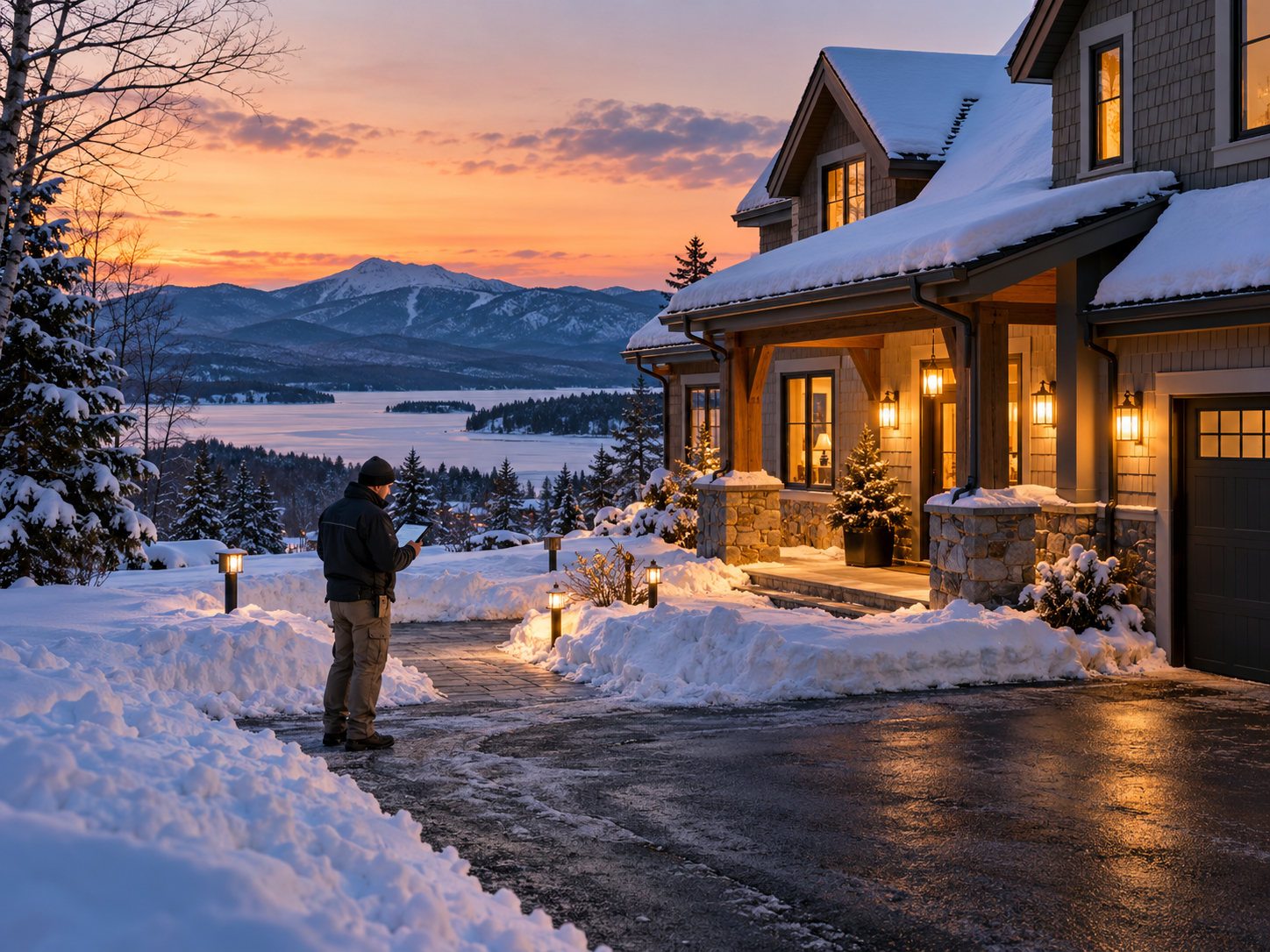
Knowing how to protect your property in winter is the single most critical factor for vacation homeowners in New Hampshire and Maine who want to preserve their real estate assets and maintain high rental returns. As severe winter weather approaches the Northeast, regions like the White Mountains, the Lakes Region, and coastal Maine experience extreme sub-zero temperatures and sudden blizzards. Unattended secondary homes or unmonitored mountain cabins face severe structural risks that can destroy years of hard-earned equity if preventive action is not taken in time.
The Severe Threat of Northeastern Freeze Cycles
Leaving a vacation home unattended during severe cold snaps exposes the structure to hidden mechanical and architectural failures. Heavy snow accumulation places intense weight on rooflines, clogged gutters create damaging ice dams, and sudden freeze-thaw cycles cause silent pipe bursts inside unheated walls.
According to winter weather safety alerts from the National Weather Service, secondary homes and unoccupied rental properties suffer significantly higher rates of catastrophic water damage during sudden freeze events compared to professionally monitored residences. Knowing how to protect your property in winter is not merely routine property upkeep—it is your primary defense against $5,000+ emergency repair invoices and lost booking revenue during the lucrative ski season.
7 Proven Secrets: How to Protect Your Property in Winter
To ensure complete structural preservation and maximum cash flow for your vacation rentals across Nashua, Manchester, Bedford, Portland, and surrounding areas, follow these operational steps:
1. Professional Technical Winterization
Complete drainage of exterior water lines, valve insulation, and baseline heating audits must be performed well before the first deep freeze hits the region.
2. Smart Thermal Monitoring and Temperature Audits
Install smart thermostats paired with remote sensor alerts. The baseline rule for secondary homes in New Hampshire and Maine is to never allow interior temperatures to drop below 55°F (12°C), effectively preventing main pipe freeze-ups.
3. On-Site Physical Walkthroughs
Technology alone cannot catch subtle roof leaks or foundation drafts. Regular physical inspections by a local team guarantee immediate detection of storm damage or power outages following major Nor’easters.
4. Gutter Maintenance and Roof Clearing
Clearing leaves and debris in late autumn prevents water blockages. This stops ice dams from forming and forcing melted snow under roof shingles, which damages internal insulation and drywall.
5. Efficient Guest Turnover Management
Capitalize on winter tourism by implementing rapid turnover protocols between guest stays. Maintaining a warm, fully operational property leads to 5-star guest reviews and higher seasonal occupancy rates.
6. Replacing Surprise Emergency Bills with Predictable Care
Trade the anxiety of middle-of-the-night panic calls for a fixed monthly management plan. Understanding how to protect your property in winter through routine maintenance is vastly cheaper than paying emergency contractor rates during a storm.
7. Tax Deductions for Property Maintenance
All costs associated with professional management, home inspections, snow removal, and technical winterization are classified by the IRS as ordinary business expenses deductible on Schedule E, helping reduce your taxable rental income.
Peace of Mind vs. Unexpected Winter Disasters
Executing a clear strategy on how to protect your property in winter eliminates the need for long-distance travel or stressful midnight phone calls. Instead of dealing with flooded basements from hundreds of miles away, remote homeowners receive detailed digital photo reports confirming that their property is warm, secure, and ready for guests.
Proactive oversight turns seasonal weather risks into a stable, predictable real estate operation, protecting your market value year after year.
Frequently Asked Questions
What is the most critical step for how to protect your property in winter?
The most vital step is completing a thorough technical winterization of your plumbing systems and keeping interior heat monitored above 55°F at all times.
Can property management fees for winter care be deducted on taxes?
Yes. Fees paid for professional home monitoring, winterization, snow removal, and property maintenance are fully deductible expenses on IRS Schedule E for income-generating properties.
How do I maintain rental revenue during the winter months in NH and Maine?
Maintain high occupancy by marketing your property to winter sports enthusiasts, keeping heating systems fully functional, and working with a local management team for instant guest support.
For remote homeowners in New Hampshire and Maine looking to safeguard their investments and maximize rental cash flow, EverTrust Property Management offers customized home monitoring and full-service rental care. Contact our expert team today to prepare your property for the upcoming winter season.
- Website: evertrustpm.com
- Email: contact@evertrustpm.com
- Phone: (603) 287-2860


